
Jul 26, 2026
•
7 mins read
There's no single number that works for every home, and anyone who gives you one flat answer without asking about your layout is guessing. But there is a reliable way to work it out: walk your property, count the actual entry points and vulnerable areas, and match cameras to those, rather than picking a number first and figuring out where to put them later. Here's how to do that properly.
The Short Answer, by Home Type
If you want a starting point before doing the full walkthrough below, here's roughly what most Indian homes land on:
- Apartments and flats: 2 to 4 cameras, usually covering the main door, one indoor common area, and a balcony if it's accessible from outside.
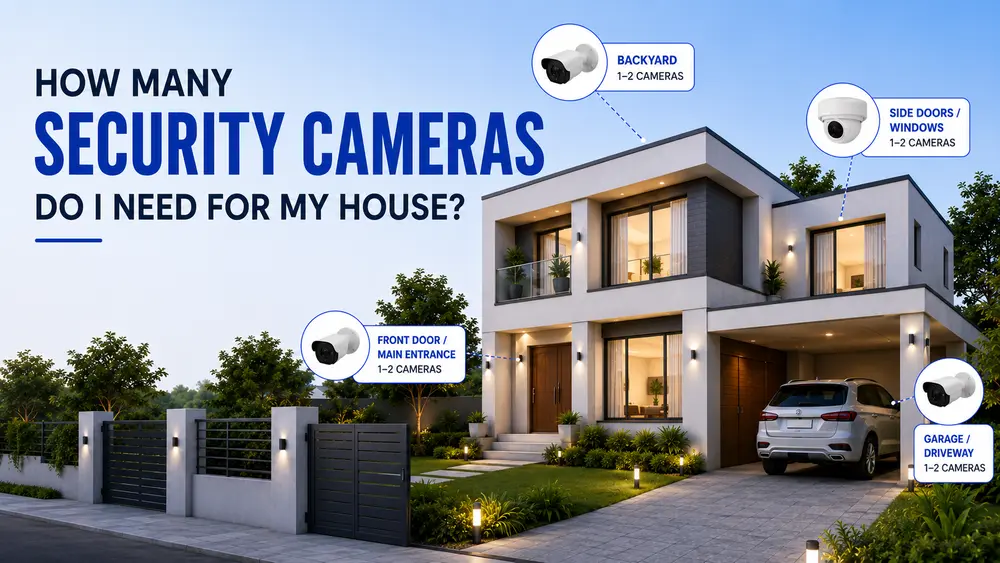
- Independent houses: 4 to 8 cameras, covering the main gate, front door, backyard or terrace, and parking.
- Larger villas or bungalows: 8 or more cameras, since there are simply more sides, gates, and outdoor areas to cover.
These are starting ranges, not fixed rules. A one-floor apartment with a single door needs far less than a duplex flat with a private terrace, even though both are technically "apartments."
Start with a Walkthrough, Not a Number
The better way to answer this question for your specific home is to walk the property and list every point where someone could enter or where you'd want a record of activity. Ask yourself:
- How many doors and gates does the property have, including side or service entrances?
- Are there ground-floor windows that could be accessed from outside?
- Is there a driveway, parking spot, or garage worth monitoring?
- Does the layout include a backyard, terrace, or balcony reachable without going through the main door?
- Are there specific rooms with valuables (a home office, a locker, a room where jewelry or cash is kept)?
Each "yes" here is a candidate for a camera. Add them up, and you'll usually land close to the ranges above, but tailored to your actual home instead of a generic guess.
Priority Areas, in Order
If your budget only stretches to one or two cameras right now, place them where they matter most first:
- Main door: this is the single most important camera in almost any home. Mount it at eye level, angled slightly down, so it clearly captures a visitor's face.
- Main gate or the view of the road: a visible camera here is the biggest deterrent you can add, since it makes a property look like more risk than it's worth to an opportunistic intruder.
- Back gate or terrace: the most commonly overlooked entry point, and the one intruders specifically look for because homeowners rarely cover it.
- Parking or driveway: useful for vehicle safety and for catching anyone loitering near a parked car.
- Indoor common area: a hallway or living room camera helps if you want visibility on movement inside the home, particularly useful if domestic help is present during the day or if you have young kids or elderly parents at home alone.
Everything past this point (additional bedrooms, home offices, storage rooms) is worth adding as your setup grows, but isn't essential for a first installation.
Factors That Push the Number Up or Down
Property size: a rough guideline used by installers is about one camera per 500 square feet of area you actually want covered, though this varies with layout, since a long narrow plot needs different coverage than a square one.
Number of floors: a duplex or multi-floor independent house usually needs at least one additional camera per floor if there's a separate entrance or balcony access on that level.
Outdoor space: a home with a large yard, multiple gates, or a long driveway needs more outdoor coverage than a compact plot with a single entrance.
Who's home during the day: if domestic help, children, or elderly parents are home alone for parts of the day, an indoor camera covering common areas adds a layer of visibility that pure entry-point coverage doesn't.
Budget and priorities: it's completely fine to start with 2 cameras covering your highest-priority points and expand later, rather than trying to install a full system in one go.
Wide-Angle and PTZ Cameras Can Reduce the Count
Not every area needs its own dedicated camera. A wide-angle camera (130° or more field of view) can cover an entire yard or a wide gate area that would otherwise need two fixed cameras. A PTZ (pan-tilt-zoom) camera can cover multiple zones from a single mounting point, which is useful for larger open areas like a compound or a long driveway. Using one of these strategically can bring your total camera count down without leaving gaps in coverage.
A Simple Way to Plan It
Before buying anything, sketch a rough layout of your property (a phone photo with arrows works fine) and mark every entry point and area you listed earlier. Number them by priority. That sketch alone tells you your minimum camera count and roughly where each one needs to go, which is far more useful than starting with "I'll buy four cameras and figure out placement later."
Conclusion
A written guideline only gets you so far; the actual number depends on your property's specific layout, entry points, and priorities. If you'd rather have someone walk the site and map out exactly how many cameras you need and where, Raj Communication can do a proper site assessment and recommend a setup that fits your home instead of a generic package.
Frequently Asked Questions
How many cameras does a normal house need?
Most independent houses in India need 4 to 8 cameras covering the main gate, front door, backyard or terrace, and parking. Apartments typically need fewer, around 2 to 4.
Is one camera enough for a small home?
One camera can cover a single entry point, which is better than nothing, but it leaves other areas like a back gate or balcony unmonitored. Two to four cameras is a more realistic minimum for most small homes.
Do I need indoor cameras as well as outdoor ones?
Not always. Many homes cover entry points with outdoor cameras only. An indoor camera is worth adding if domestic help, children, or elderly parents are home alone during the day, or if you want visibility on a specific high-value room.
What's the most important camera to install first?
The main door camera, followed by one covering the gate or road view. These two cover the highest-traffic entry point and act as the strongest visible deterrent.
Can one wide-angle camera replace multiple fixed cameras?
Yes, in some cases. A wide-angle or PTZ camera can cover a large yard or compound area that would otherwise need two or three fixed cameras, which can reduce your total count without leaving blind spots.