Aug 02, 2026
•
6 mins read
Most break-ins do not happen because someone outsmarted a security system. They happen because of small, ordinary things left unattended: a gate left unlocked, a light that never comes on, a travel photo posted while the house sits empty. A camera helps, but it's one piece of a bigger picture. Here are the tips that actually make a difference, starting with the ones that cost nothing and moving toward the ones worth investing in.
1. Fix the Small Habits First
Before buying anything, look at what is already costing you security for free. Lock first-floor windows and doors every night, even when you're home. Don't leave spare keys under a mat, in a flowerpot, or hooked near the letterbox, since these are the first places anyone checks. If you've just moved into a new home, change the external locks immediately. You have no idea how many old keys are floating around from previous residents, contractors, or previous owners' relatives.
2. Get the Lighting Right
Poor lighting around entrances is one of the most common and most overlooked weaknesses in Indian homes. A motion-sensor light near the main gate or door does two things at once: it startles anyone approaching after dark, and it means your camera actually captures something usable instead of a dark blur. Cover the back gate and terrace too, not just the front, since these are the entry points people forget and intruders specifically look for.
3. Place Your Main Camera Where It Actually Matters
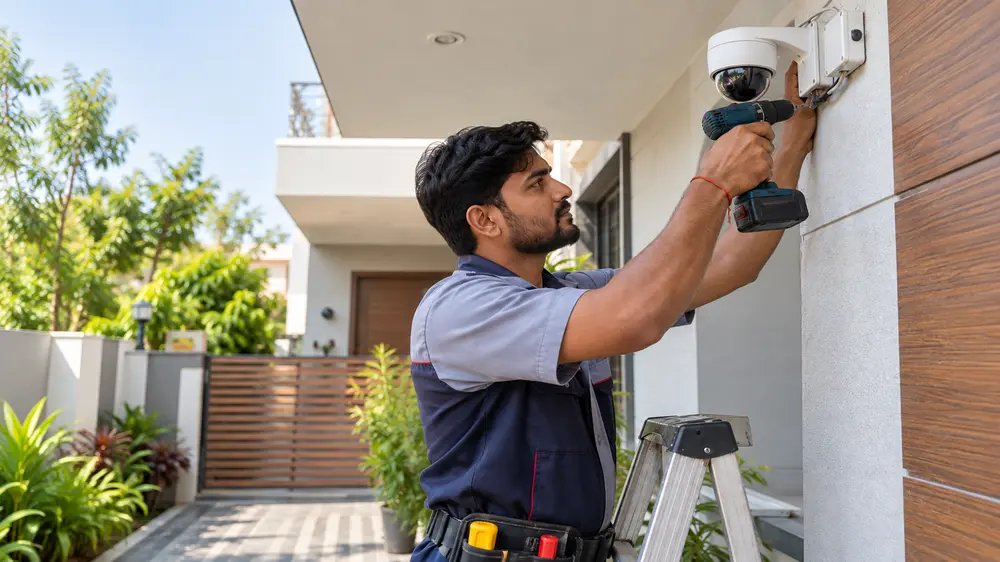
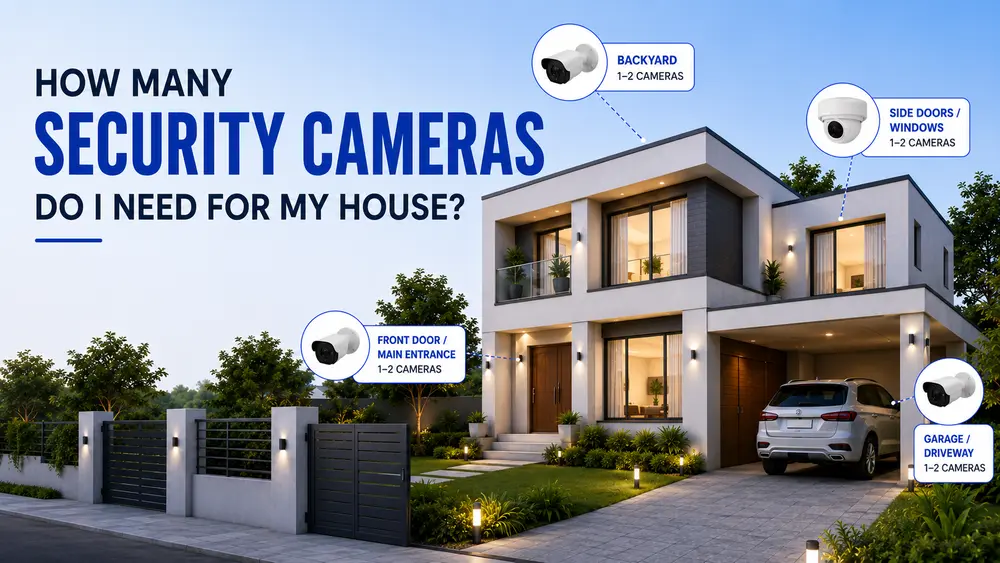
The single most useful camera in a home points at the main door, mounted at eye level (roughly 7 feet high) and angled slightly down so it clearly captures a visitor's face, not just the top of their head. A second camera with a clear view of the road or gate acts as the biggest deterrent you can install, since a visible camera makes opportunistic theft look like too much trouble. After that, the back gate and terrace deserve coverage before anything indoors, since that's where most break-in attempts actually happen, not the front door.
4. Stop Broadcasting When You're Away
This one costs nothing and gets ignored constantly. Don't post travel updates, live location, or "we're at the airport" photos while your home sits empty. It's a direct signal to anyone watching that the house is unattended. Share the trip after you're back, not while you're gone. If you need someone to check on the house, ask a trusted neighbor directly instead of announcing your absence publicly.
5. Know Who's Actually at Your Door
With deliveries and domestic help being a daily part of most Indian households, verify before opening rather than after. A camera with two-way audio lets you speak to whoever's at the gate without opening the door first, which matters especially when you're home alone or it's after dark. For recurring visitors like domestic help or regular delivery agents, a simple routine (confirming names, expected timings) prevents most impersonation attempts.
6. Add a Basic Alarm or Smart Lock if You Can
You don't need a full monitored security system to get meaningful protection. A basic door/window sensor alarm alerts you the moment an entry point is opened while you're asleep or away. Smart locks remove the risk of a lost or copied key altogether, and many now log every entry, so you know exactly when the door was opened and by whom. These are worth adding gradually rather than all at once, starting with whichever entry point worries you most.
7. Don't Forget Fire and Gas Safety
Home security isn't only about break-ins. A smoke alarm and a gas leak detector are inexpensive and catch the kind of emergency that a camera alone won't help with. If your kitchen runs on a gas cylinder, a leak detector near the connection is a small cost against a serious risk, and it's one of the most skipped items on most home security checklists.
8. Secure Your Home WiFi Too
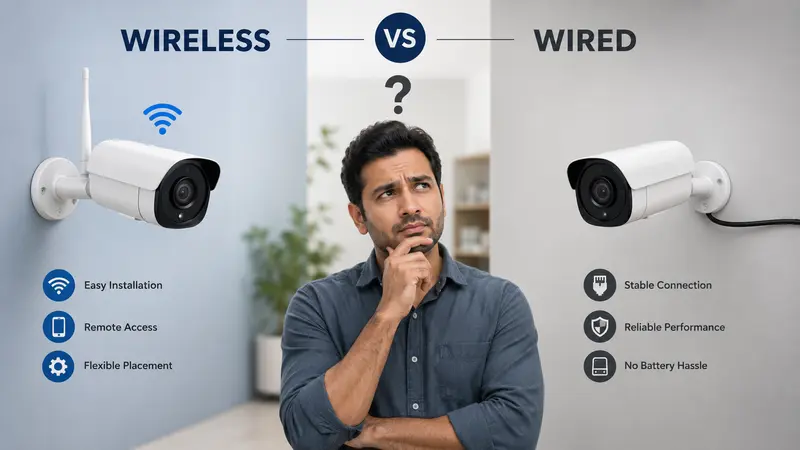
Your home network is now part of your home's security, not separate from it. If your WiFi camera, smart lock, or router still has its default admin password, that's the easiest way in for anyone technically inclined nearby. Change the default password, set up a separate guest network for visitors' phones, and keep your router's firmware updated. This matters more now that so many home security devices, cameras included, connect through the same WiFi network as everything else in the house.
9. Apartment-Specific Tips
Living in a gated community with a guard and a lobby camera feels safer, but it doesn't cover your actual flat. Don't assume building-level security is enough:
- Lock your own door and windows regardless of building security downstairs.
- Don't rely on the building's shared CCTV for your specific unit; it usually only covers common areas, not your door.
- Balconies and ground-floor windows are common entry points that building security doesn't monitor closely.
- If your society allows it, a small camera covering your own door adds a layer the building's system doesn't.
10. Build Up Gradually, Not All at Once
You don't need to do everything this week. Start with the basics: solid locks, decent lighting, and one camera covering your main entry point. Once that's in place, add night vision coverage for the back gate, then a basic alarm or smart lock, then expand camera coverage as your budget allows. Most Indian households end up with a mix of low-cost habits and a few well-placed devices rather than one expensive all-in-one system, and that combination works fine.
Conclusion
None of this needs to happen overnight, and it doesn't need to be expensive to start. If you've got the basics covered and are ready to add proper camera coverage, whether that's a single door camera or a full multi-point setup, Raj Communication can walk your property and recommend exactly what fits your home and budget.
Frequently Asked Questions
What is the single most important home security tip?
Cover your main entry points properly, meaning working locks on every door and window, decent lighting, and at least one camera facing the main door and gate. Most break-ins exploit whichever entry point is easiest, not the most secure one.
Do I need a full security system to protect my home?
No. A combination of good locks, lighting, one or two well-placed cameras, and basic habits like not sharing your absence publicly covers most of the risk. A full monitored system is worth adding later if your budget allows.
Where should I place my CCTV camera at home?
Start with the main door, mounted at eye level and angled slightly down to capture faces clearly. Add a camera covering the gate or road next, then the back gate and terrace, which are commonly overlooked entry points.
Is apartment security different from an independent house?
Yes. Building-level guards and common-area CCTV don't cover your specific flat. Your own door, balcony, and ground-floor windows still need their own locks and, ideally, their own camera coverage.
Should I worry about my home WiFi as part of home security?
Yes. Many home security devices, including WiFi cameras and smart locks, run on your home network, so a default router password or an open network puts those devices at risk too.