Aug 02, 2026
•
7 mins read
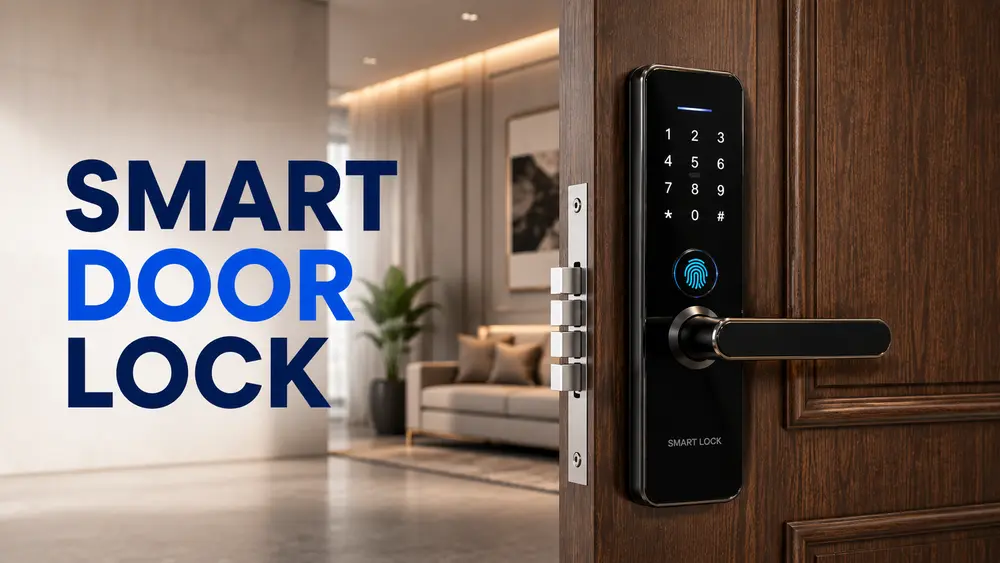
A smart door lock replaces your regular key-and-latch system with something you can open using a fingerprint, a PIN code, an app, or a card, instead of fumbling for keys every time you walk in. They've gone from a niche gadget to a fairly common upgrade in Indian homes over the last couple of years. But like any upgrade, it's worth understanding what you're actually getting, and what you're giving up, before installing one on your main door.
What Is a Smart Door Lock System?
A smart door lock system is an electronic lock that replaces or attaches to your existing door hardware, and it uses one or more of several methods to let you in: fingerprint recognition, a PIN code entered on a keypad, an RFID card, a Bluetooth or WiFi connection to a mobile app, or a temporary OTP (one-time password) you can share with a guest or delivery person. Most systems combine at least two or three of these methods, so you're not relying on just one way to get inside.
The system usually has two parts working together: the physical lock mechanism (bolts, a latch, sometimes a full handle unit) and the electronics that control it (the sensor, keypad, and connectivity module). Power typically comes from AA batteries, with many models including an emergency backup, like a 9V battery port or a USB charging point, so you're never actually locked out if the main batteries die.
Some smart locks work entirely offline using fingerprint or PIN access, with WiFi or Bluetooth as an optional add-on for remote control through an app. This matters because it means a smart lock doesn't stop working during an internet outage, only the remote-access features do.
Are Smart Door Locks a Good Idea?
For most Indian homes, yes, with a few honest caveats. Here's what makes them genuinely useful:
No more fumbling for keys. Fingerprint or PIN access means you're not searching a bag for keys with groceries in both hands, and you can't lock yourself out by forgetting a key at home.
Easy access sharing. Giving a family member, house help, or a guest temporary access is as simple as sharing a PIN or generating an OTP, without needing to cut a spare key or worry about getting it back.
A record of who came and went. Many smart locks log every unlock event, so you know exactly when the door was opened and by which method, which a traditional lock simply can't tell you.
Harder to pick than they look. Despite the perception that anything "electronic" is easier to break into, modern smart locks generally use encrypted communication and are actually more resistant to physical lock-picking than standard mechanical locks, which remain vulnerable to that exact method.
They don't fail during power cuts. Since most run on batteries rather than mains electricity, a load-shedding outage doesn't affect them at all.
Where they make less sense: a second home you rarely visit, a door that already has strict building-level security you're comfortable with, or a household that strongly prefers the simplicity of a traditional key with no batteries or apps involved at all. If ease of use and access sharing don't matter much to your situation, the upgrade may not be worth it for you specifically.
What Are the Downsides (Cons) of Smart Door Locks?
It's worth being upfront about the real trade-offs, since most listicle-style reviews gloss over these:
Battery dependency. Even with backup options, a smart lock does eventually need battery changes, and forgetting to check battery levels is the most common complaint among owners. Most models give a low-battery warning well in advance, but it's still one more thing to keep track of that a traditional lock never required.
Upfront cost. A traditional deadbolt costs a few hundred rupees. A smart lock starts around ₹3,000 for basic models and can go well above ₹20,000 for premium options with cameras or advanced features, which is a real cost difference to weigh against the convenience.
App and connectivity reliability. WiFi-enabled locks depend on a stable home network for remote features, and a few well-known brands have had complaints about app glitches or delayed notifications. This is one of the more common downsides mentioned by actual owners, more than security itself.
Door and hardware compatibility. Not every smart lock fits every door. Indian wooden doors typically range from 35mm to 65mm in thickness, and some locks require specific door preparation or professional installation, which adds to the cost and isn't always a simple DIY swap.
Fingerprint sensors and humidity. In very humid conditions, some optical fingerprint sensors can become less reliable than capacitive ones, so it's worth checking which sensor type a lock uses if you're in a coastal or high-humidity region.
Perceived hacking risk. While well-built smart locks are generally secure, the idea of a lock connected to WiFi or Bluetooth understandably makes some people uneasy. The practical way to manage this is choosing a lock with strong encryption from an established brand and keeping its firmware updated, rather than avoiding smart locks altogether.
Popular Smart Door Lock Brands and Price Ranges in India
Prices vary widely by brand, unlock methods, and build quality:
- Entry-level locks (basic PIN and key access, sometimes fingerprint): roughly ₹3,000 to ₹6,000. Good for internal doors, guest rooms, or budget-conscious apartment setups.
- Mid-range locks (fingerprint, PIN, RFID, sometimes Bluetooth app control): roughly ₹6,000 to ₹14,000, which covers most Indian households' main-door needs.
- Premium locks (WiFi connectivity, OTP sharing, auto-lock, sometimes a built-in camera): roughly ₹14,000 to ₹35,000, aimed at buyers who want full remote access and extra features.
Godrej, Yale, and Qubo are among the most established names in the Indian market, each offering options across these price tiers. Indian-focused brands are also worth considering if you specifically want your access data stored within India rather than on international servers.
What to Check Before Buying
- At least 2 to 3 unlock methods, so you're never stuck if one fails, like fingerprint plus PIN plus a physical key backup.
- Door thickness compatibility, since Indian doors vary and not every lock fits every door without modification.
- Battery backup type, ideally a 9V emergency port or USB charging option rather than relying on a single battery type.
- Local service support, since a locked-out situation isn't something you want to wait days to resolve.
- Build material, since metal-bodied locks tend to hold up better than plastic ones against Indian heat, dust, and monsoon humidity over time.
Conclusion
A smart lock is a genuinely useful upgrade for most Indian homes, but the right model depends on your door type, budget, and how much you value remote access versus keeping things simple. If you'd rather have someone check your door's compatibility and recommend a lock that actually fits your home instead of guessing from a spec sheet, Raj Communication can help you choose and install the right system. Call +91 9569 493988 or message us on WhatsApp at +91 9369 988 602 for a free consultation.
Frequently Asked Questions
What is a smart door lock system?
It's an electronic lock that replaces or works with your existing door hardware, letting you unlock it using a fingerprint, PIN, RFID card, or a mobile app instead of a traditional key, often combining two or more of these methods for backup access.
Are smart door locks a good idea?
For most homes, yes. They remove the hassle of physical keys, make sharing access with family or guests simple, and keep working through power cuts since they run on batteries. They make less sense if you rarely need to share access or strongly prefer a purely mechanical lock.
What are the downsides of smart door locks?
The main downsides are battery dependency, higher upfront cost compared to a traditional lock, occasional app or connectivity issues, and the need to check door compatibility before installation. Well-built locks from established brands are generally secure, but it's worth choosing carefully.
Do smart door locks work during a power cut?
Yes. Most smart locks run on batteries rather than mains electricity, so they keep working normally during outages. Only WiFi-based remote features depend on your router staying powered.
How much does a smart door lock cost in India?
Entry-level locks start around ₹3,000, mid-range options with fingerprint and RFID access run ₹6,000 to ₹14,000, and premium locks with WiFi and extra features go from ₹14,000 up to ₹35,000.
Can a smart lock be hacked?
It's technically possible with any connected device, but well-built smart locks use encrypted communication and are generally harder to bypass than traditional locks are to pick. Choosing an established brand and keeping firmware updated is the practical way to minimize this risk.
Also Read: