Jul 26, 2026
•
8 mins read
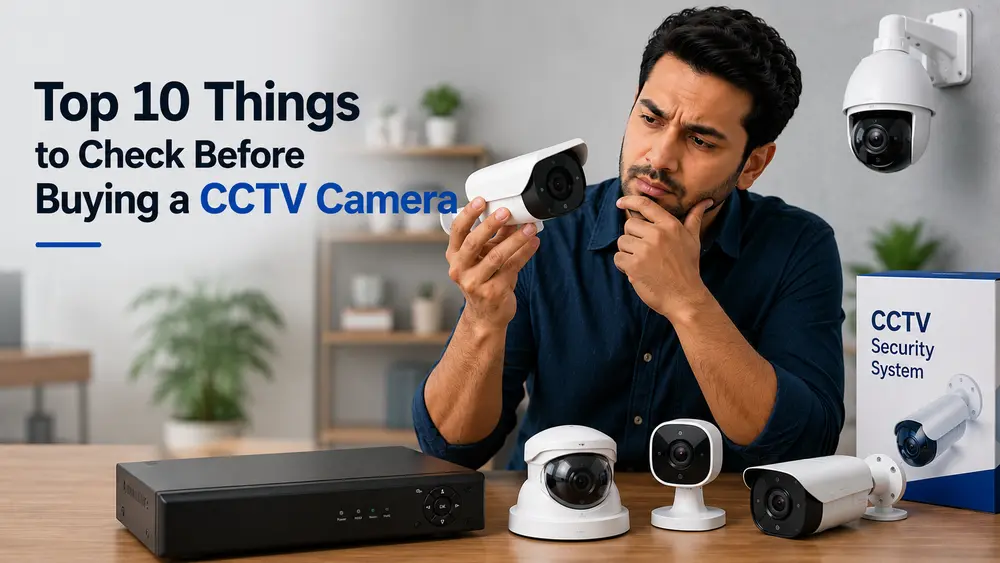
CCTV for homes used to mean one thing: a wired camera running back to a DVR box in a cupboard. That option still exists, and for a lot of houses it's still the right one. What's changed is that wireless WiFi cameras have become good enough, and cheap enough, to be a real alternative rather than a compromise. So the real question most homeowners are trying to answer isn't just "which camera" but "wired or wireless," and this guide covers both properly, including where each one actually makes more sense.
Do CCTV Cameras Actually Improve Home Security?
Mostly, yes, though it's worth being honest about what they can and can't do. A camera won't physically stop someone from breaking in. What it does is change the odds: a visible camera makes a property look like more trouble than it's worth, and if something does happen, you have footage instead of guesswork.
That footage matters more than people expect. It's what insurance companies ask for, what the police use to identify someone, and often the only way to prove a delivery was stolen rather than "never sent." The peace-of-mind part is real too. Being able to check on your parents or your kids from your phone, without calling and interrupting them, is worth something on its own.
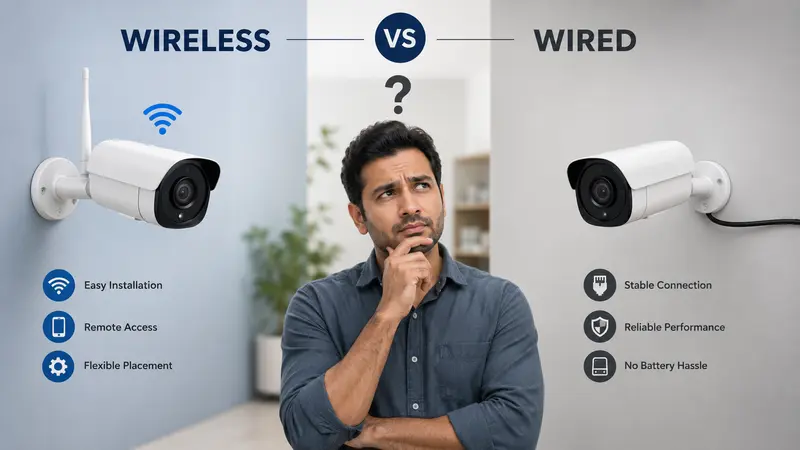
Wired vs Wireless CCTV - Which One Fits Your Home
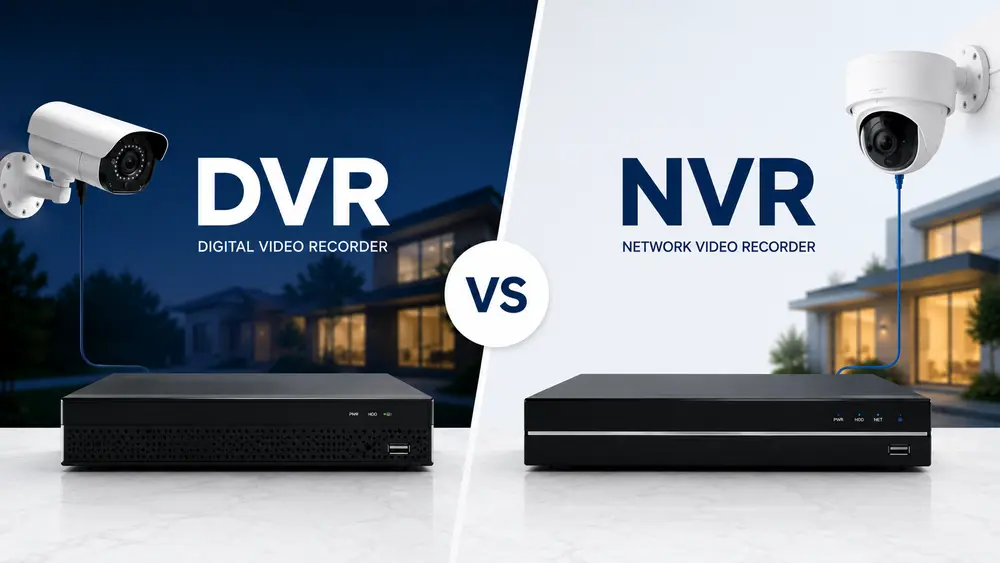
Wired CCTV runs each camera back to a DVR or NVR recorder through a physical cable. This is still the standard choice for independent houses and villas that want a permanent system, and it has real advantages:
- No dependence on WiFi signal strength, so a camera at the back gate works exactly as well as one at the front door.
- Nothing to hack over the internet unless the system itself is connected online, since the footage sits on a local hard drive.
- Continuous recording rather than motion-triggered clips only, if you want a full timeline rather than snippets.
- Brands like CP Plus, Hikvision, and Dahua have mature wired systems with long service histories in India.
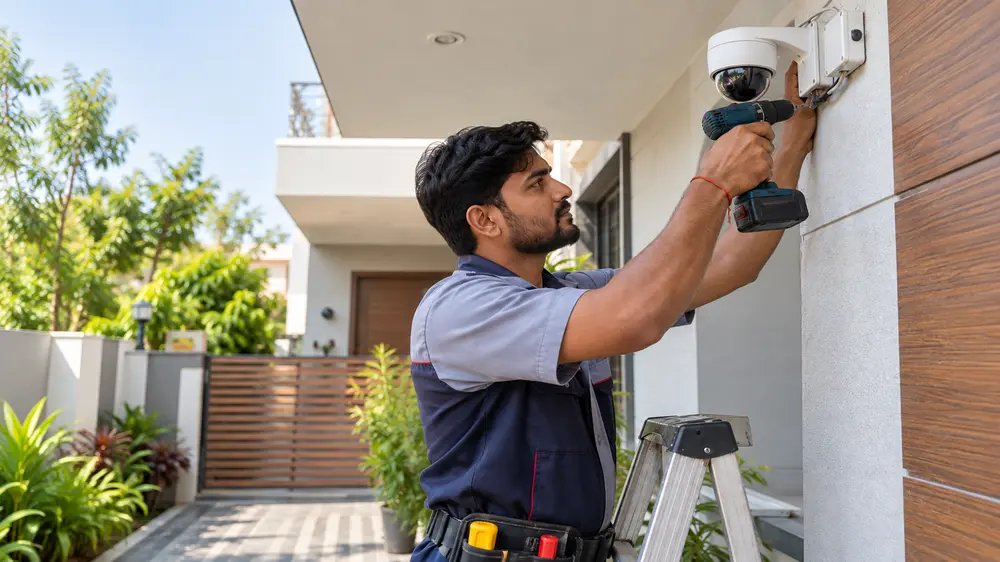
The trade-offs are the upfront work: an electrician has to run cables through walls or ceilings, which is a bigger job in a rented flat or an already-built home, and the DVR/NVR box needs a spot to sit.
Wireless (WiFi) CCTV connects each camera directly to your home network instead of a cable. It suits apartments, rented homes, and anyone who wants to add cameras without construction work:
- No drilling or cabling between floors, which matters most if you don't own the property.
- Setup usually takes minutes: mount it, connect to WiFi, scan a code in the app.
- Easy to move or take with you if you shift houses.
- Current models from Tapo, Mi, Qubo, and CP Plus's WiFi range now do 2K or higher, so the old complaint about wireless cameras having worse picture quality doesn't hold up the way it used to.
The trade-off runs the other way: performance depends on your WiFi staying up and the camera staying in good router range, and most rely on a microSD card or cloud plan for storage rather than a large local hard drive. If your area gets frequent power cuts, either system needs a small UPS or battery backup to keep running through them.
Which to pick: if you're renting, in an apartment, or want to start with just a couple of cameras, wireless gets you there faster and cheaper. If you own an independent house or villa and want one system covering six or more points with continuous recording, wired is still the more dependable long-term setup.
CCTV Camera for Home with Mobile Connectivity
This is the feature that changed home security from something you set up and forgot about into something you actually use daily. A camera with mobile connectivity lets you:
- Watch live video from anywhere with internet
- Get a phone alert the moment it detects motion
- Talk through the camera if it has two-way audio (useful for telling a delivery person where to leave a package)
- Pull up old recordings instead of relying on memory
This isn't limited to wireless cameras. Wired systems get the same mobile access through their DVR/NVR box, which connects to your router and pushes footage to an app, so you don't lose remote viewing by choosing a wired setup. Nearly every camera or recorder sold in India today, from Tapo and Qubo to CP Plus and Hikvision, comes with an app for this. The differences are in how reliable the app is and how long you can store recordings before they get overwritten.
Why Night Vision is not Optional
Most break-ins and theft attempts happen after dark, so a camera that turns useless at night defeats half the purpose. Look at two things: the night vision range (given in meters) and whether it's infrared (black-and-white footage) or full-color night vision, which uses a small spotlight to keep colors visible. Full-color night vision is more expensive but makes it much easier to describe a person or vehicle later, since you're not just looking at a grainy grey figure.
How Many Cameras Do You Actually Need?
This depends more on your entry points than the size of your home:
- Apartments: usually 2 to 4 cameras, covering the main door, balcony, and one indoor common area
- Independent houses: typically 4 to 8, covering the gate, main door, backyard, and parking
- Larger villas: 8 or more, since there are simply more sides and entry points to cover
A quick walk around your property, noting every door, gate, and window at ground level, will tell you more than any general rule of thumb.
CCTV Camera for Home Security Price in India
Prices vary a lot depending on what you're buying, so it helps to separate single cameras from full systems.
Single WiFi cameras (indoor or outdoor, 2MP to 4MP): roughly ₹1,300 to ₹8,000 per camera, depending on resolution and brand. Budget options from Tapo, Mi, and Realme sit at the lower end; CP Plus and Imou's higher-resolution outdoor models sit closer to the top.
CCTV camera price for a full set (4 to 8 wired cameras with a DVR, hard drive, cables, and installation) typically runs ₹15,000 to ₹30,000, including the technician's labor. This is still the more common choice for independent houses that want a permanent, professionally wired system rather than standalone WiFi cameras.
The mistake to avoid is buying the cheapest camera you can find. A camera that stops connecting to WiFi after a few months, or has night vision that's really just a dark grey blur, isn't saving you money, it's just delaying the cost of buying a second one.
Best CCTV Camera for Home Security - What to Actually Look For
There's no single "best" camera, since a rental flat and an independent house with a garden have different needs. But the checklist stays the same:
- Resolution: 1080p Full HD is the baseline now; 2K or 3MP is worth the small extra cost for clearer face and number-plate detail.
- Storage: microSD card for local storage, cloud storage as backup, or both. Local storage means no monthly fee but also means the footage is gone if the camera itself is stolen.
- Weatherproofing: for anything mounted outdoors, check the IP rating (IP65 or higher handles Indian monsoons fine).
- App reliability: read a few recent reviews specifically about the app, since a camera is only as useful as the app that shows you the footage.
- Human detection vs. plain motion detection: human detection cuts down false alerts from passing cars, trees moving, or your own pet, which matters if you don't want ten notifications an hour.
- Local brand support: CP Plus, in particular, has wide service coverage across smaller Indian cities, which is worth factoring in if you're outside a metro.
CCTV for Home Security in India - What's Changed
Home surveillance in India has moved past being something only businesses installed. More families are setting up cameras to check on elderly parents during the day, confirm deliveries were left safely, keep an eye on domestic help, and simply have proof if something goes wrong with a vehicle parked outside. Cheaper WiFi cameras and better mobile internet are the two biggest reasons this became affordable rather than a luxury.
Conclusion
The right camera setup depends on your home's layout, your budget, and whether you'd rather have a wired system or standalone WiFi cameras. If you're not sure where to start, Raj Communication handles CCTV camera installation and home security setups, and can walk your property, tell you exactly how many cameras you need and where, and get everything running on your phone.
Frequently Asked Questions
How many CCTV cameras are enough for a home?
Most apartments need 2 to 4 cameras. Independent houses usually need 4 to 8, depending on the number of doors, gates, and parking areas.
Can I watch my CCTV camera on my phone?
Yes. Almost every CCTV camera sold for home use now comes with an app for live viewing, motion alerts, and playback, as long as you have an internet connection.
Are wireless CCTV cameras reliable?
Yes, provided your WiFi connection is stable and the camera is installed within good router range. For outdoor cameras, also check that it's weatherproof.
Is night vision necessary?
Yes. Most theft and trespassing happens at night, so a camera without decent night vision misses the footage that matters most.
What's the price of a CCTV camera for home security in India?
A single WiFi camera runs roughly ₹1,300 to ₹8,000. A full wired system with 4 to 8 cameras, DVR, and installation typically costs ₹15,000 to ₹30,000.
Also Read: