

Aug 02, 2026
•
9 mins read
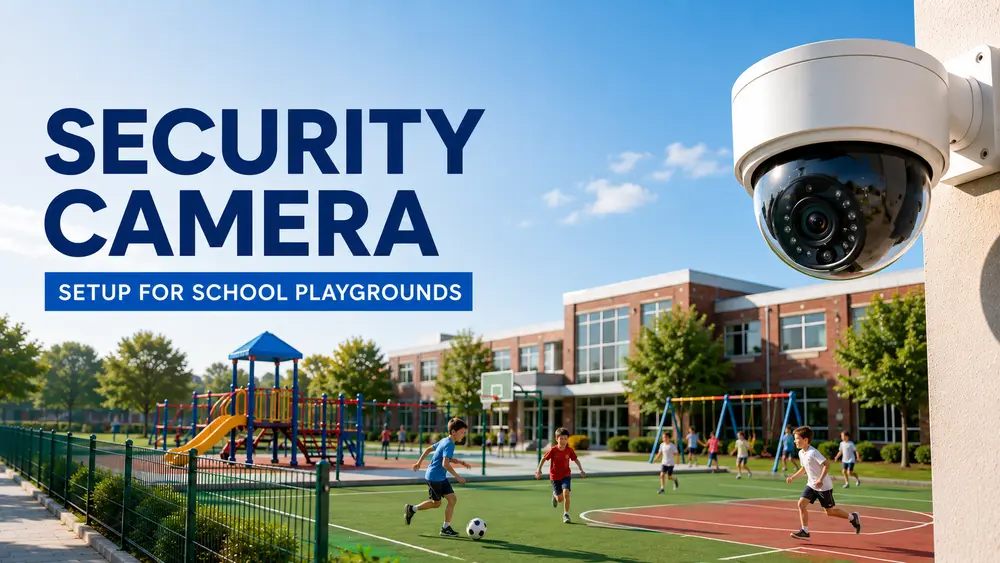
A playground is one of the hardest areas on a school campus to cover properly. It's wide, it's open, kids are moving in every direction, and there's usually equipment, trees, or a boundary wall creating blind spots that a single camera can't see past. A setup that works fine for a corridor or a gate will leave gaps here. Here's what actually holds up for playground coverage.
Why Playgrounds Need a Different Approach
Most of a school's cameras are covering narrow, predictable spaces: a doorway, a corridor, a gate. A playground is the opposite. It's a large open area where kids scatter in unpredictable directions, and the things you're trying to catch on camera (a fall near equipment, an unsupervised gap in the boundary, someone entering from outside) can happen anywhere across that space. A camera built for a hallway, with a narrow field of view, simply isn't built for this job.
Camera Types That Actually Work for Open Outdoor Areas
Wide-angle or fisheye cameras are the practical choice for covering a playground's open middle area from a single mounting point. A wide field of view (130° or more, and fisheye models go even wider) means fewer cameras are needed to cover the same ground, which also means fewer gaps between camera views.
PTZ (pan-tilt-zoom) cameras are worth adding at key vantage points, since staff can pan across the playground or zoom in on a specific spot if something needs a closer look, without needing a dedicated camera pointed at every corner in advance.
Bullet cameras are the standard choice for the playground's perimeter and boundary line, since they're built for long-range outdoor viewing and double as a visible deterrent against anyone trying to enter from outside the fence or wall.
Dome cameras, with their vandal-resistant housing, work well near ground-level or lower mounting points where curious hands can reach, which is a real concern on any playground.
Must-Have Specs for Playground Cameras
Weatherproofing: playground cameras sit outdoors permanently through sun, rain, and dust, so an IP66 or IP67 rating is the baseline, not optional, unlike an indoor corridor camera where this doesn't matter at all.
Vandal resistance: an IK10-rated, vandal-resistant housing protects the camera from impact, whether that's an accidental ball strike during play or deliberate tampering. This matters more here than almost anywhere else on campus.
Night vision or low-light performance: schools run early morning assemblies, winter afternoons with poor light, and sometimes evening events on the same grounds, so cameras need to perform well outside of bright daylight hours, not just at noon.
High resolution: 4MP or higher holds up much better across a wide, open playground than the 2MP cameras that are fine for a small indoor room, since you're covering far more ground per camera.
Mounting Height and Placement
Playground cameras generally work best mounted around 12 to 15 feet high. This keeps them out of reach for tampering while still giving a clear, wide view of the play area below. For the boundary or perimeter, a practical rule installers use is roughly one camera for every 100 to 150 feet of fence line, adjusted based on how straight or broken up the boundary actually is.
For the main play equipment area, the goal is general supervision coverage, not close-up identification of individual children. One well-placed wide-angle or fisheye camera covering the equipment zone is usually enough to see if something's wrong, without the camera being zoomed in close enough to feel invasive.
Watch for Blind Spots Behind Structures
Playground equipment, trees, and boundary walls all create shadows a single camera can't see past. Walk the actual playground before finalizing camera positions, and check the view from each proposed mounting point at the times of day the space actually gets used, since shadows and glare shift significantly between morning and afternoon sun angles.
Should Playground Cameras Record Audio?
Generally, no. Playground cameras are meant for supervision and safety, not for picking up children's conversations during play. Most schools disable audio recording specifically on outdoor play area cameras, even if audio is enabled elsewhere on campus for entrances or offices. If you're unsure what your specific state or board expects here, it's worth checking alongside your broader CBSE or state CCTV compliance requirements rather than assuming audio should be on everywhere by default.
Why PoE Makes Sense Outdoors
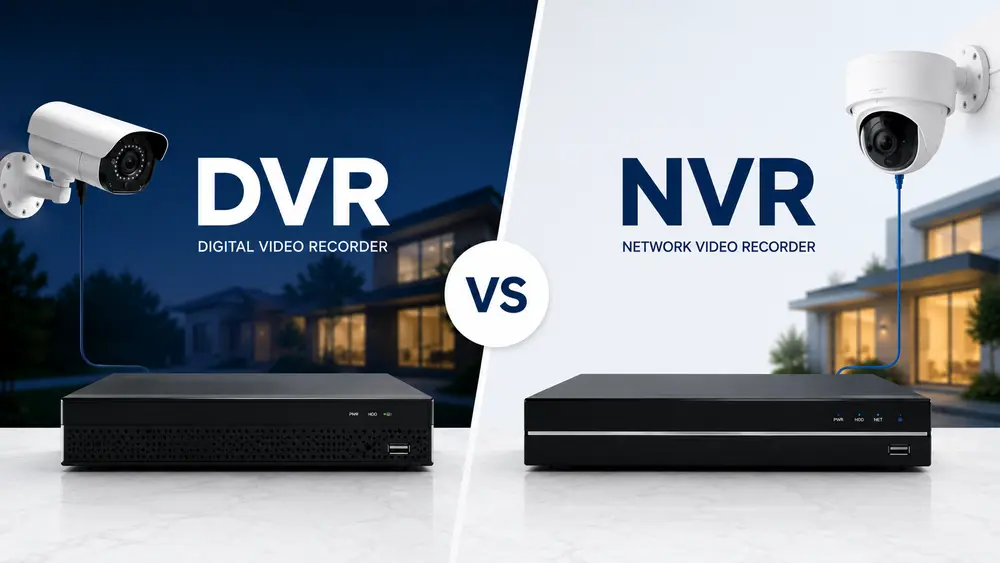
For playground cameras specifically, PoE (Power over Ethernet) is usually the more practical wiring choice over a standard wired DVR setup. A single Ethernet cable carrying both power and data means fewer separate power lines running across an outdoor area exposed to weather, and it plays well with an NVR-based system if your school is already using IP cameras elsewhere on campus.
A Practical Playground Setup
For a mid-sized school playground, a workable setup usually looks like:
- One or two wide-angle or fisheye cameras covering the main play and equipment area
- Bullet cameras spaced along the boundary or fence line, roughly every 100 to 150 feet
- A PTZ camera at a central or elevated vantage point for closer looks when needed
- All cameras rated IP66/IP67 and IK10, mounted 12 to 15 feet high
- Audio recording disabled on outdoor play area cameras
- Footage running into the same NVR system covering the rest of the campus, so staff aren't checking a separate app just for the playground
Conclusion
A playground's open layout makes it one of the trickier areas to plan camera coverage for, and getting it wrong usually means blind spots you don't notice until something happens in one. If you'd rather have someone walk your school's playground and recommend exact camera types, positions, and count, Raj Communication works with schools on this kind of campus-specific planning, alongside the rest of your CCTV compliance needs. Call +91 9569 493988 or message us on WhatsApp at +91 9369 988 602 for a free consultation.
Frequently Asked Questions
What type of camera is best for a school playground?
Wide-angle or fisheye cameras work best for covering the open play area from a single mounting point, combined with bullet cameras along the boundary and a PTZ camera for zooming in when needed.
How high should playground cameras be mounted?
Around 12 to 15 feet is the practical range. This keeps cameras out of reach for tampering while still giving a wide, clear view of the play area.
Do playground cameras need night vision?
Yes. Schools run early morning and low-light afternoon activities, so a camera with poor low-light performance will miss footage during exactly those hours.
Should audio be recorded on playground cameras?
Most schools disable audio recording on outdoor play area cameras, since the goal is supervision, not capturing children's conversations. This is worth confirming against your specific state or board requirements.
How many cameras does a school playground need?
It depends on the size and shape of the playground, but a rough guide is one boundary camera for every 100 to 150 feet of fence line, plus one or two wide-angle cameras for the central play and equipment area.
Also Read: